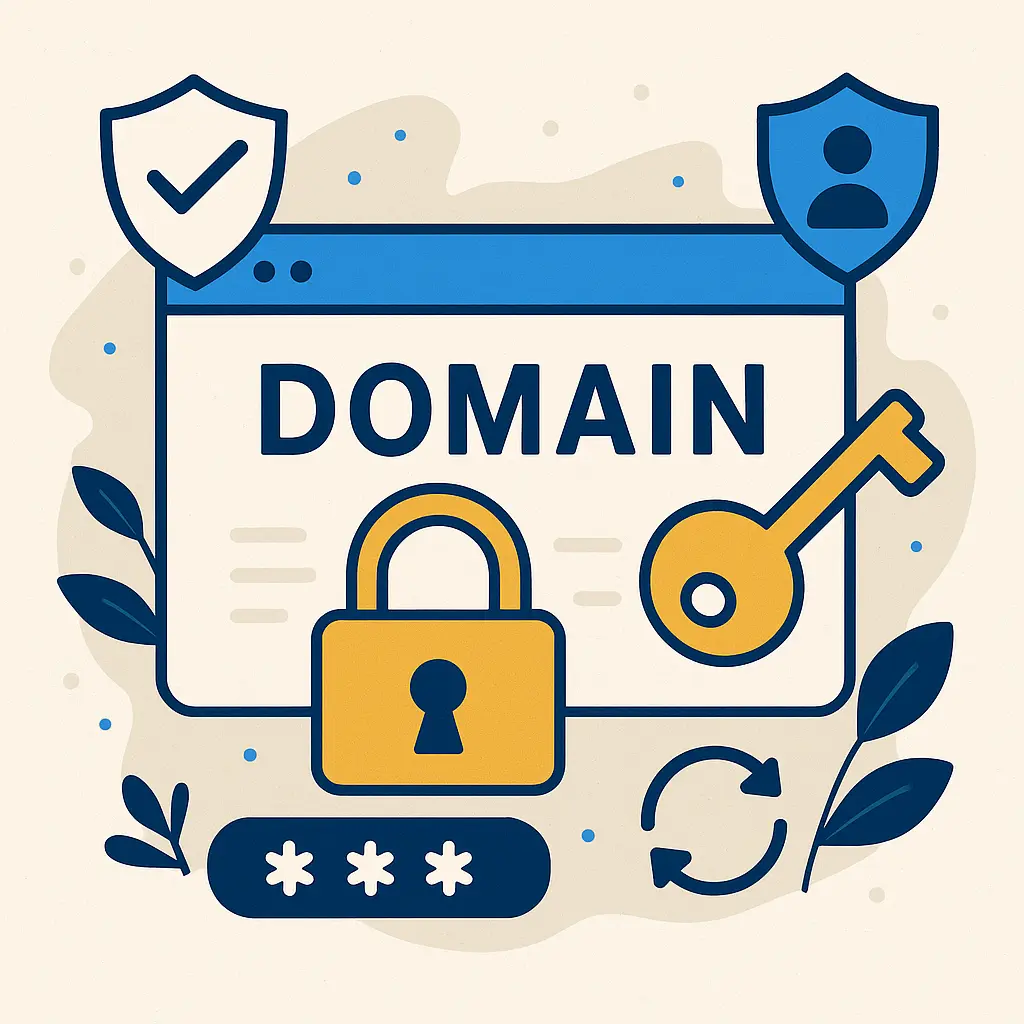
Your domain is more than a URL — it’s your brand’s digital headquarters. Lose it, and you’re effectively locked out of your own business. Yet most domain owners treat renewal emails and registrar settings as afterthoughts, unaware that a single overlooked detail can cost them everything.
Why Domains Slip Away
Domains don’t always vanish through sophisticated hacks. Sometimes, they’re lost to simple negligence.
Expired renewals: A billing card expires, auto-renew fails, and someone else registers your name the next morning.
Compromised accounts: Weak passwords or reused logins make registrar accounts easy targets.
DNS tampering: Attackers reroute your traffic to fraudulent sites before you even realize what’s happening.
Phishing traps: A fake “password reset” email fools you into handing over your credentials.
Each scenario is preventable, but only if you treat domain security as seriously as locking your office door.
The Security Habits That Work
Unique, strong passwords: Never reuse them. Your registrar login is the gateway to your entire online presence.
Two-factor authentication: The most effective barrier against unauthorized access.
Registrar lock: Keeps your domain from being transferred without your explicit consent.
Updated contact email: Outdated information means you’ll miss critical alerts and renewal notices.
Manual backup for renewals: Don’t rely solely on auto-renew. Add calendar reminders and ensure your payment details stay current.
Trusted registrar: Choose one that offers DNSSEC, account activity logs, and responsive support.
WHOIS privacy: Shields your personal info from public records, reducing spam and targeted scams.
Regular DNS audits: Check records quarterly. Small changes can signal big problems.
Mistakes That Invite Trouble
Sharing registrar credentials across teams
Clicking “reset password” links without checking the sender’s domain
Assuming auto-renew is infallible
Ignoring alerts from your registrar or hosting provider
A Simple Domain Safety Routine
Strong, unique password
Two-factor authentication active
Domain lock enabled
Correct contact email on file
Auto-renew confirmed and reminders set
WHOIS privacy active (if available)
DNS reviewed at least once per quarter
Closing Thought
A domain isn’t just a digital label; it’s the core of your credibility online. Losing it isn’t just inconvenient—it’s public, costly, and often irreversible. Security here isn’t about paranoia; it’s about discipline. Keep the locks on, stay alert, and your domain will keep serving you — not someone else.